
Last updated November 2, 2026
Whole-system duct and dryer vent check with before-and-after photos - you see exactly what came out of your vents
That "$99 whole-house special" is a bait ad - the real number appears once they are in your hallway, or the "clean" is a shop-vac at the register. We photograph the inside of your ducts before and after instead.
Air Duct Cleaning Emergency Preparedness Guide for Orange Homes
Orange sits in a strange meteorological sweet spot: close enough to the coast for marine layer mornings, far enough inland for triple-digit Santa Ana days, and downwind of three major wildfire corridors. The 2020 Silverado Fire pushed Orange County’s Air Quality Index past 500 in some neighborhoods, and thousands of homes spent weeks cycling smoke-tinged air through HVAC systems that were never designed to filter it. Here’s what most homeowners don’t realize until it’s too late: your ductwork doesn’t just move air. It stores whatever was in that air. Smoke residue, fine particulate, ash, and odor compounds settle into duct liner and flex connections, then release back into your living space for months. Our Air Duct Cleaning Maintenance Checklist for Orange Homeowners covers exactly how to prepare your Orange home’s duct system for wildfire season, Santa Ana events, and the occasional earthquake, what to do during an active air quality emergency, and how to assess the damage after. It’s written for homeowners who want specifics, not generalities.
Quick Answer
Air duct cleaning for emergency preparedness in Orange means three things: securing your HVAC system before a wildfire smoke or high AQI event hits, knowing how to operate it safely during the event, and scheduling a professional post-event inspection that addresses PM2.5 deposition, odor absorption, and any structural compromise from wind or seismic activity. A standard Air Duct Cleaning won’t fully remediate wildfire smoke damage; you need negative-air equipment and HEPA-rated capture systems to do it properly. The most important step Orange homeowners can take right now is documenting their duct system’s current condition so post-event insurance claims are straightforward.
Styles & brands we work with
- Whole-home duct cleaning
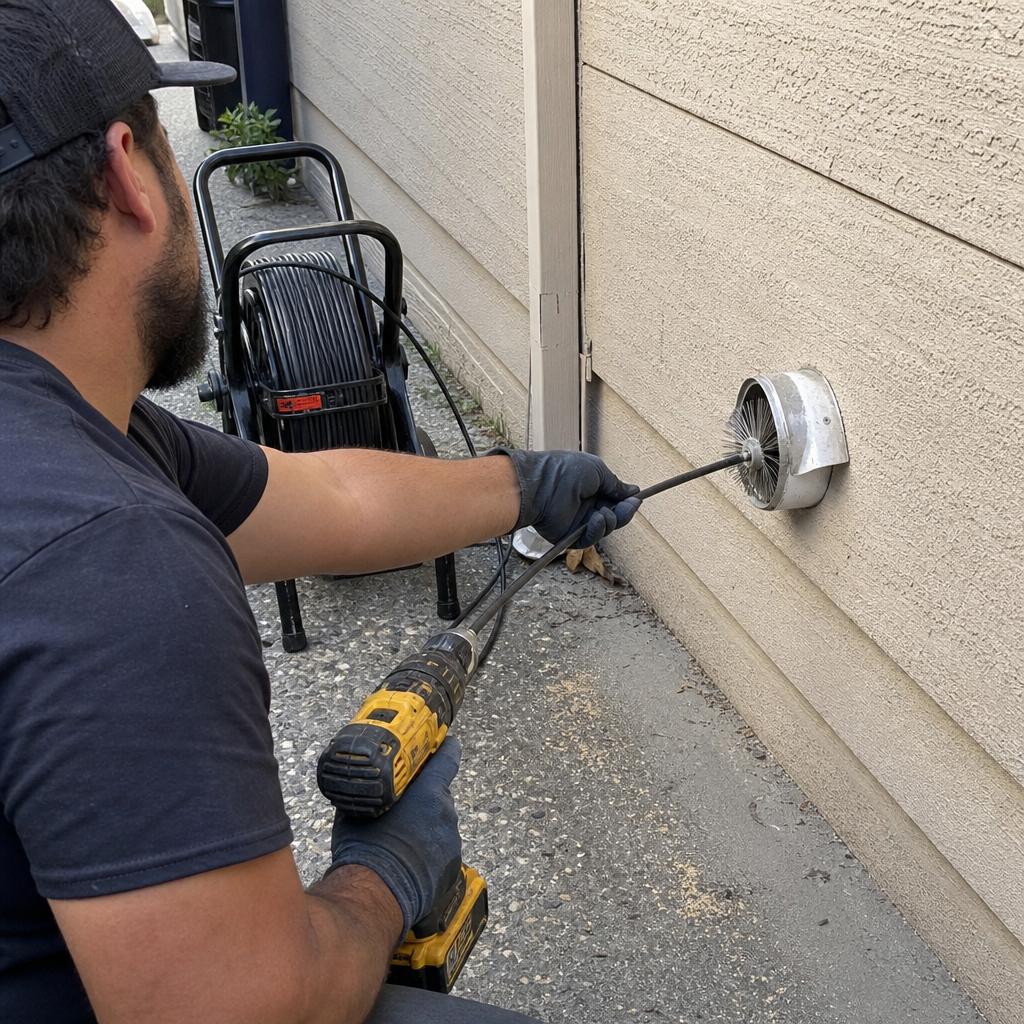
- Dryer vent cleaning
- Camera inspection
- Sanitizing & deodorizing
Table of Contents
- What Wildfire Smoke Actually Does to Duct Interiors in Orange
- Santa Ana Wind Events and Your Duct System: The Overlooked Connection
- How to Shut Down and Protect Your HVAC During an Active Smoke Event
- Post-Earthquake Duct Inspection Checklist for Orange Homes
- Why Negative-Air Equipment Matters in Smoke Remediation
- How to Document Duct Damage for Homeowner’s Insurance Claims
- Permanent Upgrades That Make Your Duct System More Resilient
- Common Mistakes to Avoid
What Wildfire Smoke Actually Does to Duct Interiors in Orange
Wildfire smoke is not one substance. It’s a moving cocktail of gases, water vapor, and particulate matter that behaves differently depending on particle size. The particles that matter most for ductwork are PM2.5 and smaller: fine enough to stay suspended for weeks, small enough to pass through standard HVAC filters, and sticky enough to bond with surfaces they touch. When Orange homes run their air conditioning during a smoke event, the return ducts pull that particle-laden air into the system. What happens next depends on your duct configuration.
In flex duct systems common throughout Orange’s 1960s and 1970s tract housing, PM2.5 particles embed into the interior liner’s fibrous surface. It’s not a surface film you can wipe away. The particles work their way into the material itself. In homes with rigid metal ductwork and internal insulation board, the odor compounds absorb into the insulation matrix. Volatile organic compounds from burned vegetation and structure materials don’t just sit on top of the insulation. They soak in. That’s why homeowners report smelling smoke weeks after changing filters and wiping down vents. The smell isn’t in the filter. It’s in the duct liner.
Standard residential duct cleaning, the kind that uses a spinning brush and a shop vac, disturbs surface debris but doesn’t extract what’s embedded in porous materials. Worse, it can aerosolize settled particles back into the living space during the cleaning process itself. In our experience after Silverado and Canyon Fire events, we’ve seen homes where a basic cleaning made the smoke odor temporarily worse because particles were knocked loose without being captured. The equipment matters. A system that maintains negative air pressure inside the duct while cleaning, pulling contaminants through HEPA filtration rather than letting them escape into the home, is the difference between remediation and relocation of the problem.
Orange homeowners should also understand that smoke damage is cumulative. A duct system that’s already carrying years of dust, pet dander, and construction debris from a past remodel has more surface area for smoke particles to bond to. The cleaner your ducts are before fire season, the less material there is to absorb and retain smoke compounds. This is why pre-season cleaning isn’t just maintenance. It’s preparation. Air duct cleaning in Orange before fire season reduces the absorption capacity of your duct system, making post-event remediation faster and more complete.
How Smoke Odor Lingers: The Science of Absorption
Odor compounds from wildfire smoke are primarily aldehydes and phenols, both of which are chemically reactive with organic materials. Duct board and flex duct liner are made from fiberglass bonded with resins that happen to be excellent at trapping these compounds. Once absorbed, the compounds release slowly over weeks or months, especially when humidity changes. Orange’s coastal-influenced humidity swings, dry mornings giving way to damp afternoons, create the exact conditions that cause absorbed odors to off-gas repeatedly. This is why you might smell smoke more strongly on damp days even months after the fire.
The permanent fix is either full liner replacement for heavily saturated sections or professional extraction using agitation plus negative-air capture, which physically removes the particulate the odor compounds are bonded to. Neither is a DIY job. Both require access to the duct interior that only professional tools provide.
Santa Ana Wind Events and Your Duct System: The Overlooked Connection
Santa Ana winds get attention for fire danger, but they create a secondary duct problem that almost nobody talks about: sustained negative pressure on the building envelope. When 40 to 60 mph winds hit an Orange home, the windward side experiences positive pressure while the leeward side goes negative. This pressure differential pulls air through every gap in the structure, including duct penetrations, return-air cavities, and supply register boots. If your duct system has disconnects or separated flex sections, which is common in homes built before 2000, the Santa Ana event actively pulls unfiltered outdoor air into the return side of your HVAC.
What does that mean in practical terms? During high wind events, a leaky return duct becomes an outdoor air intake. Dust, pollen, and fine debris from Orange’s dry hillsides get drawn into the system and distributed through supply registers. Homeowners describe it as the house feeling dustier during Santa Ana seasons. What they’re experiencing is the duct system acting as a particulate delivery mechanism. A sealed, intact duct system doesn’t do this. The fix is a duct pressure test and sealing, which is part of what a full-system inspection should include.
We’ve also seen wind-driven damage to exterior vent terminations. Dryer vents, kitchen exhaust caps, and HVAC intake screens take a beating during sustained wind events. Loose vent caps become projectiles; damaged screens allow rodent entry. Checking all exterior terminations after a Santa Ana event should be part of every Orange homeowner’s post-wind routine. If you need professional assessment, Crisp Duct Cleaning home services include inspection of the entire duct path from return to register.
How to Shut Down and Protect Your HVAC During an Active Smoke or High AQI Event
Every Orange homeowner needs a written HVAC emergency procedure. Not a mental note. A written procedure. During an active smoke event, you’ll be juggling air quality alerts, evacuation warnings, and family logistics. You won’t remember your plan if you haven’t written it down. Here’s the step-by-step protocol we recommend, customized for Orange’s typical residential HVAC configurations.
Before Smoke Arrives: Preparation Steps
- Identify your system type. Central forced-air with a single return? Multiple returns? Heat pump with auxiliary strips? Write it down. The shutdown procedure differs slightly for each.
- Install the highest-MERV filter your system can handle. Most residential furnaces in Orange can accommodate MERV 11 or MERV 13 without excessive static pressure drop. Check your furnace manual or ask a technician. Do this in September, before fire season peaks.
- Locate your circuit breaker for the HVAC system. Label it clearly. During an emergency, you need to kill power to the system quickly if needed.
- Know where your outdoor condenser unit is and how to shield it. Falling ash accumulates on condenser fins and reduces efficiency. A breathable cover, or simply hosing off the unit after ashfall, prevents long-term damage.
- Document baseline condition. Take dated photos of your return grilles, supply registers, and visible duct sections. If you file an insurance claim later, these pre-event photos establish what the system looked like before the smoke arrived.
During Active Smoke: Operating Rules
- Set your thermostat to “Fan Only” mode if possible. This runs air through the filter without pulling outdoor air into the system through the condenser. In most Orange homes, “Auto” mode cycles the system on and off, which repeatedly pulls contaminated air through the return.
- If you have a central system with a fresh-air intake, close it. Many newer Orange homes have energy recovery ventilators or fresh-air intakes. These should be sealed during smoke events.
- Run a standalone HEPA air purifier in the main living area. Your HVAC filter is not designed for wildfire smoke. A dedicated HEPA unit rated for the square footage is the only reliable indoor air treatment during severe smoke events.
- Do not run the system continuously if your filter is already loaded. A clogged filter creates negative pressure on the return side, which can pull air through duct leaks even if the system was previously sealed. Change the filter if it’s visibly discolored.
- After the smoke clears, replace the filter immediately. The filter caught some of it. Don’t run another month on a smoke-saturated filter.
Air handling during a smoke event is not complicated. It requires prep work and discipline. The homeowners who handle wildfire smoke best are the ones who thought through this before the AQI hit 200, and you can find more guides & resources to help. The ones who didn’t are the ones we hear from in October, describing homes that smell like campfire and HVAC systems that need full remediation.
Post-Earthquake Duct Inspection Checklist for Orange Homes
Orange sits near the Whittier-Elsinore fault zone, and even moderate seismic events produce enough lateral movement to compromise duct connections. A 4.0 to 5.0 event that doesn’t crack drywall can still separate flex duct from register boots, pull plenum seals loose, or shift the air handler on its mounts. The problem is invisible because the damage happens in crawl spaces, attics, and wall cavities. Here’s what to check after any earthquake strong enough to rattle dishes.
The 7-Point Post-Seismic Duct Checklist
- Air handler mounting. If the unit shifted, even half an inch, the supply plenum connection may have opened. Look for gaps at the metal-to-duct interface. A flashlight inspection from the attic access point reveals obvious separations.
- Flex duct connections at register boots. Flex duct is attached with zip ties or band clamps. Seismic movement can pop these loose, leaving a gap between the duct and the behind-the-wall register boot. The symptom is weak airflow at one specific register.
- Return air plenum integrity. The return plenum is often built from sheet metal or duct board. Seismic movement can crack duct board corners. Listen for whistling at return grilles, which indicates air being pulled through a gap.
- Duct strapping and support. Suspended ducts should be strapped every 4 to 6 feet. Earthquake movement can snap brittle strapping or pull hangers loose, leaving duct sections hanging unsupported. This is a mechanical failure that gets worse over time.
- Dryer vent connection. Dryer vent runs are often the most loosely connected part of a home’s exhaust system. After seismic activity, check the connection at the dryer and at the exterior termination. A separated dryer vent inside a wall cavity is a fire hazard and a moisture problem.
- Condensate line alignment. AC drain lines that shifted can trap water or drain slowly. Watch for water spots on ceilings near the air handler in the days after an earthquake.
- Registers and grilles. Floor registers can pop loose or shift. This is cosmetic, but bent register frames often indicate the duct below moved. Investigate if you see deformation.
If you find separation at flex duct connections, do not attempt to reseal with household tape. Duct sealing requires mechanical fasteners plus approved mastic or foil tape rated for HVAC use. Improper sealing fails within months and creates the same negative-pressure problems we described earlier. This is a job for someone who works with duct systems daily, and it’s exactly the kind of work that pairs naturally with air duct repair in Orange, which addresses structural issues the same visit they’re discovered.
Why Negative-Air Equipment Matters in Smoke Remediation Contexts
Most residential duct cleaning happens with a brush-and-vacuum setup. A rotating brush dislodges debris, and a vacuum pulls it out through the register opening. For routine dust removal, this works. For wildfire smoke remediation, it doesn’t. Here’s the technical distinction that matters.
Wildfire smoke particulate is ultra-fine and loosely adhered. Standard brush agitation turns settled PM2.5 into airborne PM2.5 inside your home during the cleaning process. The vacuum captures some of it; the rest escapes into the living space through the same registers the technician is working at. You end up with cleaner-looking ducts and a room full of re-suspended particles, which is precisely what you hired a professional to avoid.
Negative-air systems solve this by maintaining lower air pressure inside the duct system than in the surrounding room. A HEPA-filtered negative air machine attaches to the duct system, creating continuous suction that pulls any disturbed particles toward the capture point rather than letting them escape through register openings. Abatement Technologies produces this category of equipment for hospital and remediation environments, and it’s the same principle applied to residential duct work. The cleaning agitation happens while the entire duct run is under negative pressure. What gets knocked loose stays contained and gets filtered out through HEPA media before the air returns to the environment.
This matters specifically for Orange wildfire remediation because the particles you’re trying to remove are the ones you can’t see. A visible layer of dust on duct surfaces is easy to assess. PM2.5 deposition on duct liner looks like nothing at all. It’s invisible on inspection but releases odor compounds for months. The only reliable removal method is agitation under negative pressure with HEPA capture. This is the standard we hold for smoke remediation work, and it’s why the equipment brand on the truck matters more than the truck’s paint job.
We use Rotobrush and Nikro agitation equipment paired with Abatement Technologies negative-air machines on every smoke remediation project. The combination provides physical agitation of embedded particulate plus controlled capture of everything that gets dislodged. Captured, not circulated. That’s the standard Orange homeowners should demand from any company quoting post-wildfire duct work.
How to Document Duct Damage for Homeowner’s Insurance Claims
Wildfire smoke damage claims involve a documentation burden that most Orange homeowners are unprepared for. Insurance adjusters process hundreds of claims after major fire events, and they apply standardized criteria to determine what’s covered. Duct cleaning and remediation claims often get denied or underpaid because homeowners submit vague descriptions instead of evidence. Here’s what we’ve learned works.
What Insurance Carriers Look For
- Pre-existing condition documentation. Photos or inspection reports showing duct condition before the event. Without this, carriers assume any damage found existed before the fire.
- Causation evidence. Proof that the smoke entered the duct system. This means photos of ash on return grilles, visible smoke staining around filter slots, or air quality test results from the affected period.
- Professional assessment reports. A written inspection report from a qualified contractor that describes the specific damage, the observed conditions, and the recommended remediation. Generic “ducts need cleaning after fire” statements don’t survive adjuster review.
- Photographic documentation of the damage itself. Interior duct photos showing visible particulate, filter photos showing smoke residue, and any equipment used during assessment.
- Itemized remediation scope. A line-item breakdown separating emergency cleaning, full-system cleaning, liner replacement, and any repair work. Bundled pricing raises red flags with adjusters.
The sequence matters. File your claim first, get it assigned to an adjuster, and then schedule professional assessment. Most carriers want their adjuster to review the damage before remediation work begins. Performing the work first doesn’t void your claim, but it weakens your position because the adjuster can’t independently verify the damage. If the smoke event just happened and you’re waiting for claim processing, document everything with photos now. The visual evidence degrades as cleaning and time alter the duct interior.
The Photo Documentation Checklist
- Return grilles before removal. Show any visible residue or discoloration on the grille surface.
- Filter condition. Photograph the used filter against a white background. Smoke loading is visible as brown or gray discoloration.
- Interior duct shots. Take photos through register openings with a flashlight. Even blurry shots show gross contamination.
- Exterior HVAC components. Condenser unit showing ash accumulation, vent terminations showing residue.
- Roof or attic access points. If smoke entered through attic ventilation, document that pathway.
We’ve helped Orange homeowners build insurance documentation packages after wildfire events, and the pattern is consistent: specific, dated, photographic evidence gets claims approved. Vague descriptions get denied. If you’re facing a post-smoke duct remediation project, document first, claim second, remediate third. For dryer vent cleaning in Orange, the same documentation standards apply after smoke events, since dryer vents often pull contaminated outdoor air directly into the home’s interior.
Permanent Upgrades That Make Your Duct System More Resilient
Emergency preparedness isn’t only about responding to events. It’s about making your system less vulnerable before the next one. Orange homeowners who’ve been through a wildfire season or two often take the same steps afterward. Here’s what makes the biggest difference.
Upgrade 1: Duct Sealing and Pressure Testing
A pressure-tested and sealed duct system is the single most effective upgrade for emergency resilience. It prevents smoke infiltration during wildfire events, keeps Santa Ana dust out during wind season, and improves system efficiency year-round. The standard is a duct blaster test that measures total leakage in CFM at a reference pressure, followed by mechanical sealing at all joints and connections. In many Orange homes built before the 2000s, leakage rates of 20 to 30 percent are common. A sealed system reduces that to under 5 percent.
Upgrade 2: MERV 13 or Higher Filtration Capacity
This requires confirming your furnace blower can handle the higher static pressure. Many newer systems from the last decade can; older ones may struggle. The upgrade is worth it for wildfire season alone. A MERV 13 filter captures a meaningful percentage of smoke particulate that would otherwise enter your ductwork. Pair this with a 4-inch filter cabinet rather than a 1-inch slot, and you get dramatically better filtration with less frequent changes.
Upgrade 3: Aprilaire Whole-Home Air Purification
Aprilaire systems integrate directly into the HVAC airflow and provide continuous filtration plus optional UV treatment at the air handler. For Orange homes in wildfire-adjacent zones, this type of integrated purification, combined with a sealed duct system, keeps indoor particulate levels dramatically lower during smoke events than standalone portable units alone. Our technicians are trained on Aprilaire and Honeywell IAQ configurations, which matters when these systems need service or filter replacement during an active smoke event and homeowners can’t wait two weeks for a specialist.
Upgrade 4: Hard Pipe Replacement in Critical Runs
Flex duct is the weak link in seismic resilience and smoke infiltration. Replacing the most vulnerable flex runs, especially the main supply trunk and the return drop, with rigid galvanized duct eliminates the porous interior that absorbs odor compounds and provides more secure mechanical connections at every joint. It’s more expensive than flex, but homes that have been through a serious smoke event often find the cost justified the first time a neighbor’s house smells like campfire and theirs doesn’t.
Common Mistakes to Avoid
- Running the HVAC during an active smoke event on “Auto” setting. Every system cycle pulls contaminated air through the return. Switch to “Fan Only” with a clean high-MERV filter, or shut the system down entirely if the AQI exceeds 200.
- Hiring the cheapest duct cleaning company after a wildfire. The price gap between professionals and low-ball operators reflects equipment cost: negative-air machines, HEPA filtration, and experienced technicians. A $99 special after a wildfire is a red flag, not a deal.
- Replacing the filter and calling it done. Your filter catches some particles, but what passed through before you changed it is now in your duct liner. Filter replacement addresses ongoing filtration; it does nothing for what’s already embedded in the system.
- Filing an insurance claim without pre-event documentation. Adjusters process hundreds of claims after major events. Homeowners who can show a dated photo of their duct system from before the fire have a massively stronger position.
- Sealing duct leaks with duct tape. Despite the name, household duct tape is not approved for HVAC use and fails within months. Proper sealing requires foil-back tape or mastic applied over mechanically secured joints.
- Ignoring the dryer vent after a smoke event. Dryer vents pull outdoor air directly into the home. If the vent was pulling smoke-laden outdoor air during a fire event, that particulate deposited throughout the vent run and into the dryer itself. A post-event dryer vent inspection should be part of any full-system response.
- Assuming one cleaning addresses all smoke odor. Heavy smoke exposure can saturate insulation liner and duct board past the point of extraction. In severe cases, replacement of internal liner is the only lasting fix. A company that finds significant saturation should tell you that, not sell you a second cleaning.
When to Call a Professional
Call a professional duct company when you see visible particulate on return grilles after a wildfire event, when your home smells like smoke weeks after air quality has recovered, when registers in certain rooms blow weakly after an earthquake, or when you’re filing an insurance claim that requires professional assessment and documentation. Duct system inspection is not DIY work. The relevant areas are in attics, crawl spaces, and wall cavities, and the assessment requires tools and access experience that most homeowners don’t have. Crisp Duct Cleaning offers free estimates in Orange, and we carry professional-grade Rotobrush and Nikro equipment paired with Abatement Technologies negative-air capture on every job. If you suspect smoke damage, seismic compromise, or Santa Ana wind infiltration, call (833) 593-4428 and we’ll assess the system and give you an honest scope of what needs to happen.
Frequently Asked Questions
Post-wildfire duct cleaning in Orange typically costs between $450 and $900 for a standard single-family home, depending on system size, number of returns, and contamination level. Homes with heavy smoke saturation requiring liner replacement or extensive sanitization run higher. Get a written assessment that specifies exactly what the cleaning includes and whether negative-air equipment will be used. Call (833) 593-4428 for a free estimate with specific pricing for your home’s system.
Yes. Smoke particulate embedded in porous duct liner and duct board can absorb deeply enough that cleaning cannot fully extract the odor compounds. In severe cases, the lining must be replaced. Metal ducts are less vulnerable; flex duct and internal insulation are the components most likely to require replacement after heavy smoke exposure.
The indicators are visible residue on return grilles, persistent smoke odor weeks after the air quality recovered, dark-colored material on the filter before its scheduled change, and fine particulate settling on surfaces near supply registers. Any one of these justifies a professional inspection. Multiple indicators together suggest significant deposition in the duct system.
Standard brush-and-vacuum duct cleaning may reduce surface particulate but does not reliably remove odor compounds embedded in porous duct material. Effective smoke remediation requires agitation under negative-air pressure with HEPA capture, and in heavy saturation cases, liner replacement. Ask any company quoting the job whether they use negative-air equipment. If the answer is no, keep looking.
Annually, with the inspection timed before fire season starts in September. Homes in the canyon-adjacent areas of Orange, particularly near Santiago Canyon Road and the eastern foothills, face elevated exposure and should be especially consistent with pre-season inspections. If you’ve experienced a smoke event since your last inspection, schedule a post-event assessment regardless of the calendar.
Many policies cover duct cleaning and remediation when the damage is documented and the claim justifies it. The key word is documented. Pre-event photos, a professional inspection report describing observed conditions, and photographic evidence of the contamination all strengthen your claim. File before remediation work begins so the adjuster can review the damage independently. Some carriers require this step as a condition of coverage.
The Bottom Line
Orange homeowners live with a specific set of duct risks: wildfire smoke that embeds into porous liners, Santa Ana winds that exploit every leak in the system, and seismic activity that separates connections and shifts equipment. Preparedness means documenting your system’s condition before events, operating the HVAC correctly during smoke episodes, and insisting on proper negative-air remediation after. A sealed, inspected, and professionally maintained duct system handles emergencies better than one that’s been ignored for a decade. If you haven’t looked at your ducts since the last fire season, now is the time. Call (833) 593-4428 for a free estimate, and we’ll tell you exactly what condition your system is in and what it needs to be ready for whatever Orange weather or geology throws at it next.
Written by the team at Crisp Duct Cleaning, serving Orange since 2012.