
Last updated November 2, 2026
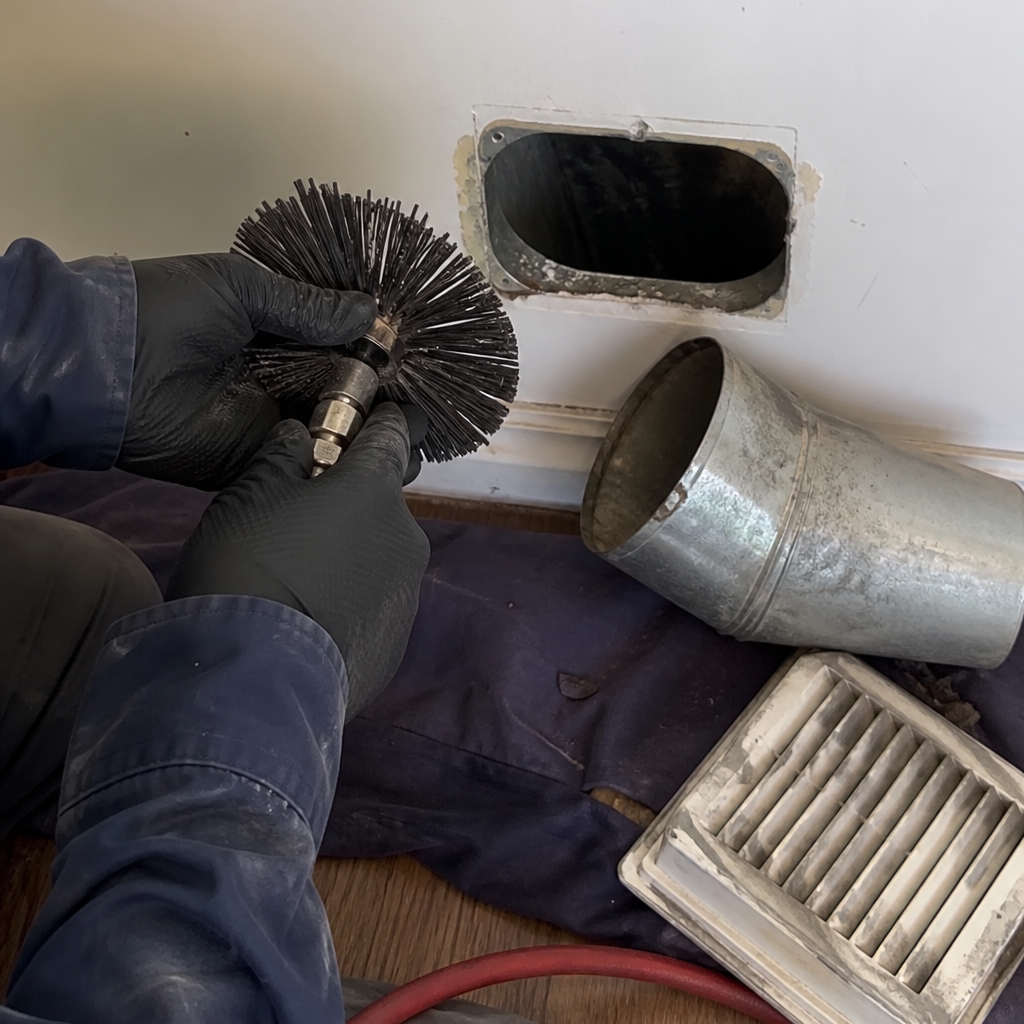
Whole-system duct and dryer vent check with before-and-after photos - you see exactly what came out of your vents
That "$99 whole-house special" is a bait ad - the real number appears once they are in your hallway, or the "clean" is a shop-vac at the register. We photograph the inside of your ducts before and after instead.
Air Duct Cleaning Troubleshooting: Common Problems and How to Fix Them
Here’s the counterintuitive truth about air duct problems: most of what homeowners call a failed cleaning is actually a successful diagnosis. When a home in Orange still smells musty two weeks after a duct cleaning, or dust returns faster than expected, the typical reaction is to blame the cleaning itself. But in our experience, the cleaning usually did its job. It removed the debris that was masking an upstream problem: a leaking return plenum, a disconnected branch line, a moisture source in the crawlspace, or a failed seal at the supply boot. In other words, the symptom got cleaned away and then came back, because the cause was never in the duct to begin with. This guide maps symptoms to root causes and explains what actually needs to happen next.
Quick Answer
Air duct cleaning problems fall into two categories: issues caused by the cleaning itself (inadequate equipment, improper sealing, skipped steps) and issues the cleaning exposed (leaks, moisture, equipment failure, microbial growth). The fix depends on identifying which one you’re dealing with. This guide walks through the six most common post-cleaning complaints, how to diagnose them, and when repair work needs to happen before another cleaning will do any good.
Styles & brands we work with
- Whole-home duct cleaning
- Dryer vent cleaning
- Camera inspection
- Sanitizing & deodorizing
Table of Contents
- Persistent Odor After Cleaning
- Dust Returns Within Weeks
- Uneven Airflow Between Rooms
- Utility Bills Climb After a Cleaning
- Visible Mold or Biological Growth
- Duct Leakage at Connections and Plenums
- Why Equipment Quality Changes Outcomes
- Common Mistakes to Avoid
- When to Call a Professional
- Frequently Asked Questions
Persistent Odor After Cleaning
Odor that survives a duct cleaning almost never originates from debris sitting in the ducts. Once the Rotobrush or Nikro agitation system has scoured the interior walls and the negative air unit has pulled the loosened material out, remaining odor sources are structural, not accumulative. What usually produces a musty or stale smell two weeks later is one of four things: moisture entering through a leaking return duct, a condensate pan in the air handler that never drains properly, microbial growth on the evaporator coil, or dead animal matter inside a wall cavity adjacent to the duct run. In Orange, the mild coastal climate means homes run air conditioning most of the year, which keeps the coil wet and gives biological material a consistent growing season.
The diagnostic sequence starts with a visual inspection of the air handler and the return plenum. If the coil or blower housing shows visible growth or accumulated debris, the ducts are downstream of the problem. Cleaning the branch lines without addressing the coil simply pushes the same contaminant signature back through the system on the next cycle. We’ve encountered this pattern in homes across Orange: a homeowner pays for duct cleaning, the smell returns, and the actual culprit is a coil that hasn’t been cleaned since the unit was installed. The order of operations matters here. The coil and blower get cleaned first, the pan and drain line get cleared, and then the ducts get done. Reverse that order and the ducts get recontaminated immediately.
Moisture intrusion is the second most common cause. A return duct pulling air from an unconditioned attic or crawlspace can draw humid outside air every time the system runs. If that air enters through an open seam or a disconnected joint, the first 20 feet of return ductwork becomes a moisture and odor factory. Sealing the return side of the system with mastic or a proper duct sealant stops the odor at the source. This is a repair task, not a cleaning task, and it’s a major reason why Air Duct Repair in Orange exists as a standalone service alongside cleaning. A technician who finds a gap on the return side and tells you that’s why the smell keeps returning is giving you the diagnosis, not making an excuse.
Dust Returns Within Weeks
If you can wipe a clean finger across a supply register and pick up visible dust 30 days after a professional cleaning, something in the system is actively introducing dust. The ducts themselves are not generating particulates. Sheet metal and flex duct are passive material: they hold what passes through them, and they release what gets dislodged. That means ongoing dust has a source, and the source is almost always outside the duct. The three most frequent culprits are a leaking return plenum pulling attic insulation or crawlspace dirt into the airstream, a filter bypass at the filter rack or filter slot, and an air handler cabinet that was never sealed properly after installation.
The diagnostic clue is where the dust appears. Dust concentrated at specific supply registers, rather than evenly across the home, points to a leak on the return side upstream of that particular branch. That leak is pulling unfiltered air from the attic, the crawlspace, or the wall cavity and mixing it into conditioned air. Dust appearing evenly everywhere points to a filter issue: the wrong size filter, a collapsed filter frame, or a filter rack that doesn’t seal. A one-eighth-inch gap around a filter lets as much unfiltered air through as a 2-inch hole cut in the return duct. This is a physics problem, not a housekeeping problem.
The fix is a diagnostic pass with a manometer or a simple smoke pencil test at the filter rack and at each return connection. In Orange, we routinely find that the return side of the system has never been inspected because the return is harder to access than the supply. Supply registers are out in the living areas. Return plenums are in attics, garages, and closets, and they get ignored. A thorough Air Duct Cleaning in Orange should include a return-side inspection, because cleaning a system with a leaking return is like mopping a floor while a hose runs through the room. Dust doesn’t need to be scrubbed away here; it needs to be stopped at the point of entry.
Uneven Airflow Between Rooms
Uneven room temperatures and weak airflow at specific registers rarely have anything to do with the cleanliness of the duct interior. A dirty duct will nearly always pass the same volume of air as a clean one until the buildup is severe enough to measurably reduce the effective diameter. What actually causes uneven airflow is leakage, disconnection, or improper balancing. In the attics and crawlspaces of Orange homes, flex duct gets compressed by storage boxes, stapled too tightly at joist crossings, or severed by rodents. A 6-inch flex line that’s been crushed down to 3 inches at a single point will deliver a fraction of its designed CFM, and no amount of cleaning restores that.
The diagnostic method is straightforward. Compare temperature difference between rooms on the same zone. If one bedroom runs 6 to 8 degrees warmer than an adjacent bedroom with similar exposure, suspect a delivery problem before suspecting an equipment problem. Then check the register itself: remove it and look for a proper seal between the boot and the wall. In Orange, we see a consistent pattern of flex duct that was never properly connected at the supply boot, with gaps of a half-inch or more bleeding conditioned air into the wall cavity instead of the room. That air is being paid for and never delivered.
Another common cause in Southern California construction is the “sagging run.” Long spans of flex duct suspended across attic joists sag over time, and the sag creates a kink at the support point. The fix is re-supporting the run with proper straps and correcting the bend radius, not cleaning it. This is also where the difference between a cleaning-only contractor and a full-system contractor shows up. A company that only cleans will clean a kinked duct and leave the kink. A technician who does Air Duct Repair in Orange will note the airflow restriction during the inspection phase and correct it, because the point of the visit is a functional system, not just a clean one.
Utility Bills Climb After a Cleaning
A spike in cooling costs immediately after a duct cleaning is usually caused by one specific mistake: the cleaning technician left an access panel off, a filter housing open, or a return-side component disconnected. When the system runs with a return leak or an open cabinet, it draws unconditioned air from the attic or crawlspace into the airstream. In an Orange summer, attic temperatures routinely exceed 130 degrees Fahrenheit. Pulling 130-degree air into a system designed for 75-degree return air forces the compressor to work against a temperature delta it was never sized for. The result is a measurable jump in runtime and energy draw.
The diagnostic check is simple. After any cleaning or service visit, walk the system: confirm the filter is seated, the air handler cabinet door is closed, and any access panels removed during the work have been reinstalled. Then check the return side. If a technician had to open a return plenum to access the coil or the duct interior, that opening must be re-sealed correctly. In our experience, the return plenum is the most common re-assembly failure point on residential systems statewide, and it’s the first place we look when a homeowner reports higher bills after any recent work.
Another cause of elevated bills is airflow restriction that was introduced, not resolved. If a cleaning included filter media upgrades or a new high-MERV filter, the pressure drop across that filter can exceed what the blower is designed to handle. A MERV 13 filter in a system designed for MERV 8 can reduce airflow enough to make the system run longer to reach setpoint. The equipment itself is fine; the filter is simply too restrictive for the static pressure the system can generate. In Orange, where homes often run air conditioning 8 to 10 months out of the year, the cumulative cost of an over-restrictive filter is real. This is one reason we train technicians to understand the full air system, including how ductwork interacts with whole-home equipment like Honeywell and Aprilaire filtration systems already installed in the home. For help choosing the right equipment and service provider, see our buyer’s guide.
Visible Mold or Biological Growth
Mold inside ductwork is a different problem from mold on a bathroom ceiling or a windowsill. In a duct system, visible biological growth means the interior surface has been wet or consistently humid for an extended period. The growth itself is secondary. The primary problem is the moisture condition that allowed it. Cleaning mold off duct surfaces without correcting the moisture source guarantees recurrence, usually within one cooling season. That’s the reality that separates responsible diagnosis from a cosmetic cleaning.
The correct response when mold is identified during a cleaning involves three steps. First, locate and correct the moisture source. This may mean sealing return leaks that pull humid outside air, repairing a disconnected dryer vent that’s discharging moisture into the attic, clearing a clogged condensate line, or addressing crawlspace moisture issues. Second, determine the extent of the growth. If it’s isolated to a section of flex duct or a single branch, replacement of that section is often cheaper and more reliable than cleaning. If it’s widespread across the system, a full containment and cleaning protocol is required. Third, re-clean using equipment capable of capturing, not redistributing, biological material. This is where the equipment distinction matters. Abatement Technologies HEPA-rated negative air units and containment systems are designed for contaminant capture. A consumer-grade blower with a brush attachment is not. When a technician runs a vacuum that exhausts into the same space it’s cleaning from, every bit of dislodged microbial material goes airborne and lands somewhere else in the home.
In Orange, the proximity of many homes to the coast means summer humidity levels inside unconditioned spaces stay elevated. We routinely find that attics with inadequate ventilation create a microclimate where the outside of the duct runs sweats, and condensation runs downhill into the interior surfaces of the branches below. The fix there is attic ventilation, duct insulation, or both, before any meaningful cleaning can hold. If you suspect mold in your ducts, the next call should be to a contractor who can determine whether the system is even a candidate for cleaning or whether replacement is the honest answer.
Duct Leakage at Connections and Plenums
Duct leakage is the single most common reason cleaned ducts don’t stay clean and conditioned air doesn’t stay conditioned. The Department of Energy estimates that the typical home loses 20 to 30 percent of its conditioned airflow to duct leakage. In our Orange service area, that number holds up: return plenums taped with aged duct tape, supply boots unsealed at the drywall, and flex connectors knocked loose by attic traffic are routine findings on every inspection. Every one of those leaks is a hole the cleaning can’t fix, because it’s a structural problem, not a cleanliness problem.
Identifying leakage starts with a visual inspection of every accessible connection: plenum to trunk, trunk to branch, branch to boot, boot to register. In many Orange homes, the flex connectors at the supply boot were installed with a single zip tie and a strip of foil tape that loses adhesion within five years. The result is a gap the size of a quarter at every register, which adds up to hundreds of dollars a year in lost cooling. Beyond the energy cost, those gaps are entry points for whatever lives in the wall cavity or the attic: rodent droppings, blown insulation, drywall dust from the original build or a 30-year-old remodel.
A static pressure check tells the rest of the story. When a system is designed for a certain total external static pressure (commonly 0.5 inches of water column for residential equipment) and the measured pressure on the return side is much higher than design, the return is restricted or leaking. When the supply side is high, the supply was undersized or the filter is too restrictive. This is a diagnostic tool, not a sales prop, and it’s the kind of measurement that tells you whether you’re dealing with a cleaning problem or a design problem. Using professional-grade equipment to clean a leaking system without reporting the leak is a disservice to the homeowner. A real technician reports it.
Why Equipment Quality Changes Outcomes
Not all duct cleaning outcomes are equal because not all duct cleaning equipment is equal. The difference between a professional cleaning and a superficial pass is the equipment used to do the work, and that difference is measurable. Professional-grade systems like Rotobrush and Nikro units combine mechanical agitation with high-volume negative air extraction. The brush or air whip loosens material from the duct walls; the negative air unit creates a controlled vacuum that pulls the loosened debris out of the system and into a containment unit, not back into the living space. This is the fundamental engineering concept: what gets dislodged must be captured at the source, not blown downstream.
The negative air concept is the second piece, and it’s the piece most often skipped by low-cost providers. Abatement Technologies negative-air and HEPA-rated equipment maintains the work area under constant negative pressure. That means air flows into the containment zone, not out of it. Contaminants dislodged during cleaning are pulled through a filtration train and held in sealed containment, rather than being allowed to recirculate through the home. For a homeowner in Orange with allergen sensitivities, a respiratory condition, or simply a desire to not have attic dust redistributed into the living room, the difference is the entire point of hiring a professional. This is what we mean when we say contaminants are captured, not circulated.
Then there’s the scope problem. Most residential cleaning companies only clean. They can’t repair, and they can’t address what the cleaning reveals. A company that fields cleaning technicians and repair technicians under the same roof can do something a cleaning-only outfit cannot: fix what the cleaning exposes. A disconnected branch, a torn flex run, a collapsed return line, a boot that never sealed properly, all of it gets addressed in sequence so that the visit results in a functioning system. That scope difference is why a Crisp Duct Cleaning home visit starts with an inspection that looks for leaks, moisture, and damage before the cleaning equipment ever comes off the truck. The cleaning is the service. The diagnosis is the value.
Common Mistakes to Avoid
- Cleaning before fixing leaks. If the return side has open seams or disconnected runs, every cubic foot of unconditioned air pulled into the system during the cleaning becomes a fresh contaminant load the moment the system turns back on. Seal first or clean again in six months.
- Using a higher-MERV filter than the system can handle. A MERV 13 filter in a system rated for MERV 8 can choke airflow, extend run times, and increase energy bills. Check the blower’s static pressure rating before upgrading filtration.
- Ignoring the air handler and coil. Ducts are downstream of the coil. If the coil is dirty or has biological growth, cleaned ducts get recontaminated on day one. The coil gets cleaned first, every time.
- Hiring on coupon price alone. Low-cost duct cleanings in the Orange market are frequently a foot in the door for a high-pressure upsell, or they use consumer-grade equipment that can’t maintain negative pressure. Neither outcome is a cleaning.
- Skipping dryer vent inspection during a duct cleaning visit. A clogged dryer vent is a fire hazard and a moisture source that feeds back into the laundry room and adjacent wall cavities. It’s a separate service, but it shares the same duct ecosystem.
- Assuming musty smells mean the ducts weren’t cleaned properly. Odor that persists after a legitimate cleaning is a signal, not a failure. It’s telling you the moisture source or the biological growth is upstream of the ductwork. Investigate.
When to Call a Professional
Call a professional when the symptom persisted after a previous cleaning, when the symptom appeared immediately after a previous cleaning, or when you can see or feel something that isn’t right: a register blowing weak air, a duct hanging loose in the attic, a filter that’s caked within 30 days, a smell that worsens when the system runs. These are not things that resolve with a second cleaning. They’re diagnosis problems. If the issue is a leak, a disconnection, a failed seal, or moisture intrusion, the next person who touches your system needs to be someone who can fix what they find, not just document it. If mold is suspected, the situation demands HEPA-rated containment and a clear remediation path. Crisp Duct Cleaning offers free estimates in Orange. Call (833) 593-4428 and describe what you’re seeing. We’ll tell you what we think the problem is and what it will take to fix it, whether or not you end up hiring us.
Frequently Asked Questions
If the system delivers weak airflow, makes whistling or rattling sounds, or shows visible disconnection in accessible areas, the problem is repair, not cleaning. If the system delivers consistent airflow but returns dust quickly, smells musty, or hasn’t been cleaned in five or more years, cleaning is the starting point. A proper inspection in Orange will determine which one applies.
A cleaning sometimes exposes a smell that was trapped inside the system for months or years, especially if the previous state was wet, biological, or filled with pest debris. If the smell persists beyond a few days, it usually means the moisture source is still active and needs to be addressed.
Negative air pressure means the cleaning area is kept at a lower pressure than the surrounding space, so air flows inward rather than outward. This prevents dislodged contaminants from escaping into the home during cleaning. Full-system equipment like Abatement Technologies units is designed to maintain this condition throughout the service.
Yes. Orange is a high-pollen region, and homes here run their HVAC systems most of the year. When ducts, coils, and returns hold accumulated allergens and distribute them through the living space during every cycle, occupants with seasonal allergies often notice the difference. A thorough cleaning with HEPA-rated equipment can reduce the load meaningfully, especially when paired with proper filtration.
A full-system cleaning in a typical Orange single-family home takes between 3 and 6 hours, depending on the number of returns, accessibility of the plenums, and the condition of the system. Time invested on the return side and at the air handler is the difference between a real cleaning and a superficial one.
Yes, if it has been more than a year since the dryer vent was last checked. The dryer vent is a separate path but shares the same home ecosystem, and a clogged vent is a fire hazard. Dryer Vent Cleaning in Orange is performed as a standalone service, and we frequently find lint blockages in homes where the air ducts have been maintained but the dryer vent hasn’t.
The Bottom Line
Duct problems are diagnostic problems. The symptoms homeowners notice, dust, odor, uneven temperatures, high bills, all trace back to specific causes, and the cause is rarely generic. A leak is a leak. A moisture source is a moisture source. A disconnected run is a disconnected run. Fix the cause and the symptom stops. Clean around the cause and it comes back. The right approach in Orange is a full-system evaluation that treats cleaning, repair, and dryer vent safety as connected parts of the same air-delivery system, using professional equipment designed for the work. For more guides & resources on maintaining your system, visit our blog. When the system is clean, sealed, and properly balanced, the results hold. When it isn’t, the symptoms come back. That’s not a cleaning failure. That’s an incomplete diagnosis.
Written by the team at Crisp Duct Cleaning, serving Orange since 2012.