
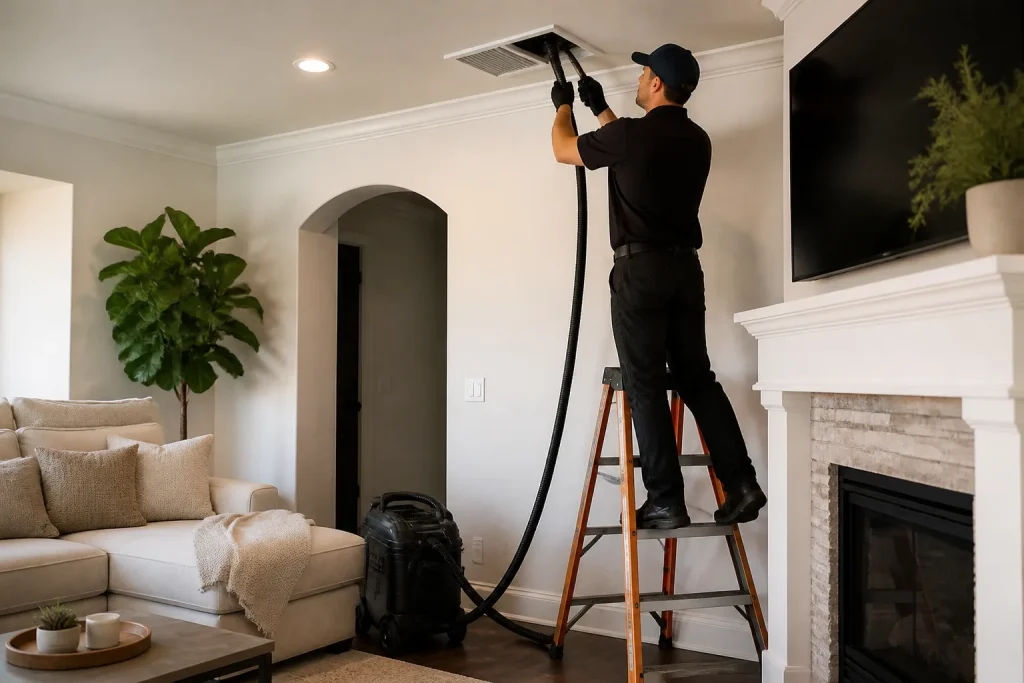
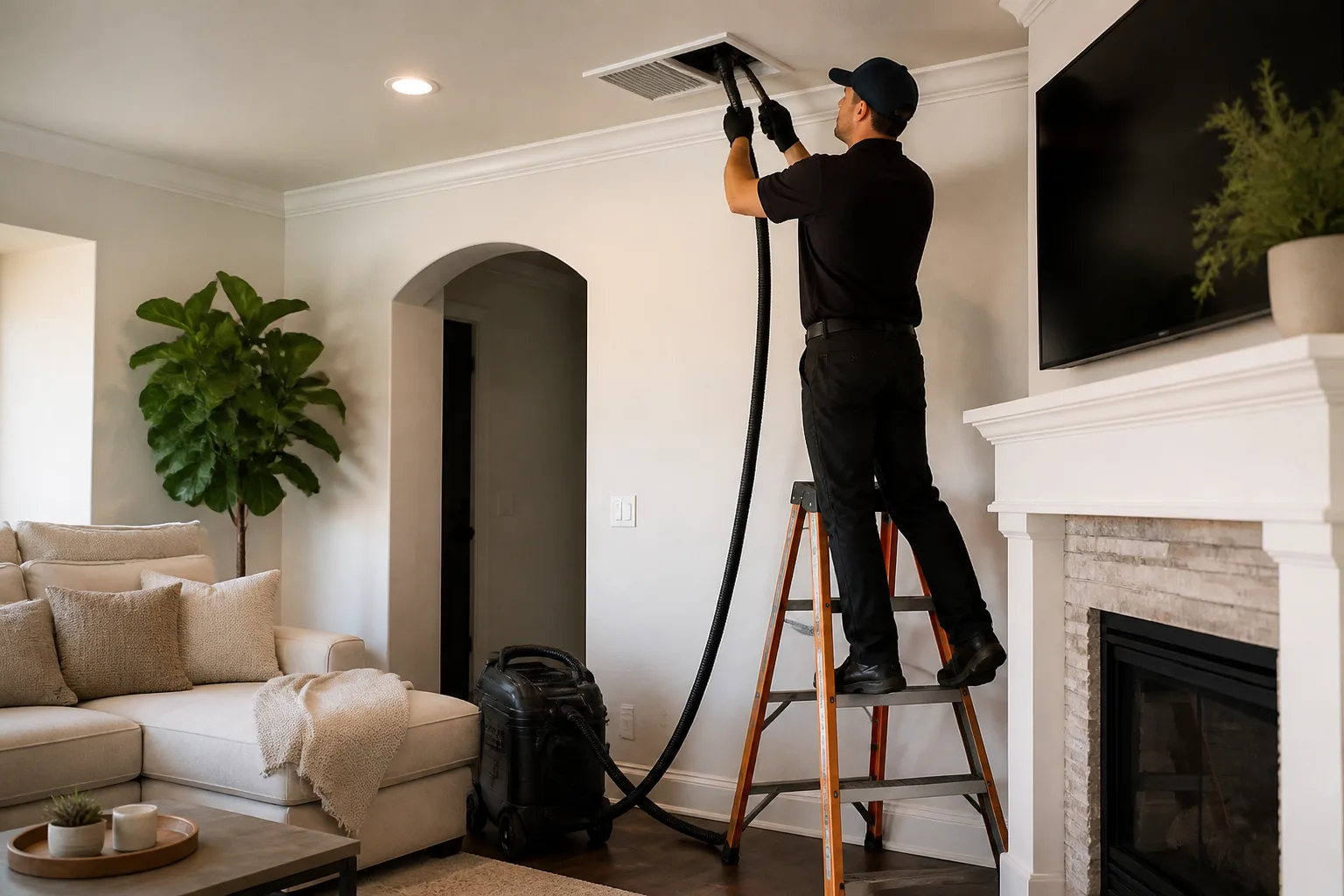
Honeywell Air Duct Cleaning in Orange: A Homeowner’s Guide
Honeywell air duct cleaning in Orange requires something most standard cleaning calls don’t account for: protecting the electronic components inside your HVAC system before any brush or vacuum touches the ductwork. A generic rotary brush run through ducts connected to a Honeywell electronic air cleaner can damage the ionizer cells and void the manufacturer warranty. That’s a $300 to $600 repair you shouldn’t have to eat because a tech didn’t know what they were looking at.
This guide walks through what Orange homeowners with Honeywell-integrated systems need to know before scheduling duct cleaning, what should happen during the work, and how to verify it was done correctly. If you’d rather skip the homework and just call a company that already knows this stuff, reach us at (833) 593-4428.
Why Honeywell Systems Need Different Duct Cleaning Protocols
Most duct cleaning in Orange follows the same script: cut an access hole, run a brush and vacuum through the supply and return lines, seal it back up. That works for a basic residential system with a standard filter and no downstream components. Honeywell whole-home air systems change the equation.
Here’s what’s at stake, explained plainly:
- Electronic air cleaner (EAC) cells – These use high-voltage ionizer wires and collector plates to charge and trap particles. They’re sensitive. Brush agitation upstream can push debris into the cells, but the bigger risk is a tech who doesn’t know the power supply needs to be locked out before work begins. Honeywell EAC power supplies carry several thousand volts. If the cell is energized during cleaning, it can short, arc, or fry the power pack.
- Zoning dampers – Honeywell zone dampers sit inside the ductwork and rotate open or closed based on thermostat calls. A brush hammering against a closed damper can bend the blade or strip the actuator motor. If the tech doesn’t manually position dampers before cleaning, you may not find out until a zone stops responding.
- HRV and ERV units – Heat recovery and energy recovery ventilators connect to the duct system and contain a heat-exchange core. Aggressive negative air pressure during cleaning can pull debris into the core, which is a pain to access and clean after the fact.
- Filter housings and sensors – Honeywell filter cabinets often have pressure sensors or filter change indicators. These need to be protected from dust migration during cleaning or you’ll get false readings afterward.
We’ve had Orange homeowners call us after a cheap cleaning left their Honeywell EAC popping its indicator light every time the blower kicked on. In one case over near Old Towne, the previous tech had knocked ionizer wires loose and the homeowner didn’t notice until allergy symptoms came back two weeks later. The cleaning was cheap. The diagnostics call wasn’t.
What Happens to Honeywell Electronic Air Cleaners During Duct Cleaning
If your Orange home has a Honeywell electronic air cleaner mounted at the return side of your air handler, the cleaning sequence matters more than the equipment brand doing the job. Here’s the sequence a competent tech follows, in order:
- Power down the EAC at the disconnect, not just the thermostat. The EAC has its own power supply independent of the blower motor circuit. Good practice is to shut off the breaker, then verify with a meter.
- Remove and inspect the EAC cells before cleaning begins. The cells should come out and be inspected for wear. Pre-existing damage gets documented so the homeowner knows it wasn’t caused by the duct cleaning.
- Clean the cells separately if they need it, using appropriate methods. Collector plates can be washed. Ionizer wires should never be scrubbed with a wire brush.
- Protect the EAC housing during duct agitation. Cover the opening with a magnetic shield or poly so loosened debris doesn’t get pulled into the housing.
- Reinstall cells after the duct run is complete. Reinstall, power back on, and verify the indicator shows normal operation at the end.
If a technician skips step one because they think the system is “off” since the thermostat isn’t calling, that’s a red flag. Honeywell EACs can stay energized even when the blower isn’t running.
Homes with Honeywell UV systems have a different concern: UV lamps are fragile and the bulbs contain mercury. Before any ductwork gets agitated, the UV lamp assembly should be removed or shielded. Broken UV bulbs in a duct system are a safety hazard and a nightmare to sweep out. We run Abatement Technologies negative-air equipment on these jobs, which captures particles at the source instead of letting them migrate through the system while we work.
Protecting Honeywell Zone Dampers During Duct Cleaning
Zoning is where we see the most damage from inexperienced cleaning crews, and it’s a common setup in Orange homes with two-story layouts or additions. Honeywell TrueZONE panels control motorized dampers in the supply trunk that direct conditioned air to different zones.
Here’s the problem: during cleaning, vibration and air pressure can cause a damper blade to shift. If a brush hits a partially closed damper at the wrong angle, the actuator gear strips. That’s $150 to $400 in parts and labor, and you won’t notice it until one bedroom stops getting cool air in July.
A proper cleaning sequence for a zoned Honeywell system:
- Open all zone dampers manually at the actuator before the cleaning run starts.
- Do not rely on thermostat commands to position dampers. Thermostats cycle dampers based on temperature calls, and during cleaning those calls don’t reflect reality.
- Lock dampers in the open position by disconnecting the actuator or using the manual override if the actuator has one.
- After cleaning, reconnect and cycle each damper through open and close at the zone panel to verify smooth operation.
- Run a full system test with each zone calling independently before calling the job done.
If your Orange duct cleaner gives you a blank look when you mention damper actuators, call someone else. This is basic stuff for anyone who works on zoned systems regularly.
Cleaning Sequence for Homes With Honeywell HRV or ERV Units
Honeywell makes heat recovery ventilators and energy recovery ventilators that tie into the main duct system. Orange homes along the 55 corridor and up in the hills often have these units because they pair well with tighter building envelopes and newer construction.
The HRV or ERV has a core, two fans, and a drain. During duct cleaning, the big risk is pulling the core full of loosened debris and making your ventilation unit less effective than it was before the cleaning. The fix is simple but easy to skip:
- Isolate the HRV or ERV from the duct system while negative-air equipment runs on the main ducts.
- Remove and clean the HRV core separately if it’s due, or at minimum inspect it.
- Check the HRV’s filter and replace if clogged.
- Verify the condensate drain isn’t blocked before reconnect.
- Run the HRV independently after the main duct cleaning is complete and confirm balanced airflow.
A Honeywell HRV that gets debris in the core doesn’t fail loudly. It just runs less efficiently, and your home slowly feels stuffier. By the time you notice, the fix is often a core soak or replacement.
Post-Clean Inspection: What Should Actually Look Different
After a duct cleaning in Orange, you should be able to inspect specific things and see measurable results. The words “we’re all done” without any verification is not a completed job. Here’s what to check:
- Inside the return register: Shine a flashlight into the return duct. You should see bare metal, not dark fuzz along the seams. If the return still looks like a dryer lint trap, the cleaning didn’t reach it.
- At the supply registers: Remove one or two register covers and inspect the duct interior within reach. Dust film will return over months, but there should be no loose debris, clumps, or visible buildup right after a cleaning.
- The blower wheel and housing: A proper job includes cleaning the blower assembly, not just the ducts. This is where the actual mechanical work of moving air happens. A dirty blower wheel cuts airflow significantly.
- The air handler coil: If the evaporator coil is accessible, it should be clean. Coil cleaning is part of any serious duct cleaning job.
- Honeywell EAC cells: The collector plates should be clean with visible spacing between them. Ionizer wires should be intact, taut, and free of buildup.
- Filter cabinet: A fresh filter installed if applicable, and the cabinet sealed and latched correctly.
Then comes the reset sequence. For Honeywell systems, that means:
- Power everything back on at the breakers and disconnects.
- Confirm the EAC power supply indicator is lit and not flashing an error.
- Set the thermostat to fan-on and walk the house, feeling each register for air movement.
- Cycle each zone if you have zoning, confirming dampers open and close.
- Check the HRV or ERV display for normal operation.
- Run the system for 20 minutes and recheck the EAC for any fault codes.
If the tech can’t or won’t walk you through this because they’re “on a schedule,” that’s a disconnect. Verification is part of the job.
Questions to Ask Any Orange Duct Cleaner Before They Start
Before you book a Honeywell-certified duct cleaning (Honeywell doesn’t offer duct cleaning certification, by the way, so anyone claiming that is stretching the truth), run through this list with the company:
- “Do you have experience with Honeywell electronic air cleaners?” If they say yes, ask what specific precautions they take. A blank pause is an answer.
- “Will you isolate or remove the EAC cells before cleaning the main ducts?” The answer must be yes.
- “How do you handle zoned systems with motorized dampers?” They should mention manual damper positioning, not thermostat control.
- “What equipment do you use?” If they can’t name the equipment, they’re using whatever the franchise dropped on them. We run Rotobrush and Nikro systems on residential jobs, paired with Abatement Technologies HEPA filtration to capture debris rather than circulate it. Names matter because different tools are suited to different ductwork.
- “Do you inspect and clean the blower wheel and coil as part of the job?” If the answer is “coil cleaning costs extra,” that’s fine, but they should at least inspect it and show you what they found.
- “Can you repair ductwork if you find damage during cleaning?” In Orange, we regularly find disconnected runs, torn flex duct, and crushed returns during routine cleanings. Air Duct Repair in Orange should be part of your cleaner’s scope, not a second company you have to call. If we find it, we can fix it on the same visit.
Property managers in Orange maintain Honeywell systems across multiple units. The same questions apply, and scheduling a single company that can clean, diagnose, and repair keeps multi-unit service calls from dragging across weeks.
How Honeywell Duct Cleaning Pricing Works in Orange
Duct cleaning in Orange runs on system-based flat pricing, and you should be wary of anything quoted per vent. A whole-house cleaning for a single system in Orange typically falls in the $400 to $900 range depending on the number of returns, accessibility of the air handler, and whether coil cleaning is included. Homes with zoned systems may run slightly higher because damper protection and verification add labor.
Beware the $99 special. In this industry, that number exists to get a tech in your driveway. By the time they’ve “discovered” multiple problems, you’re looking at a significantly larger invoice. The bait-and-switch reputation is earned, and it’s why the price should be one flat number agreed before work starts, covering the whole system.
For a Honeywell-integrated system, Air Duct Cleaning in Orange should include EAC inspection and reset, damper positioning, HRV or ERV isolation where present, and a post-clean walkthrough. If those line items aren’t included, the cheaper price doesn’t reflect apples-to-apples work.
When to Call a Pro (And When Not To)
The honest answer for Honeywell-integrated systems is that this is not a DIY scenario, and we’d say the same thing even if we weren’t in the business. The danger points here aren’t about electrical shock from the EAC, though that’s real (those power supplies produce enough voltage to hurt you). They’re about component damage that you won’t see until weeks later, when a zone damper fails or an EAC fault code appears.
If your ducts have never been cleaned, you’ve had renovation dust in the home, or someone in the house has respiratory symptoms that seem tied to the HVAC system, that’s the threshold where a professional cleaning makes sense. If your ducts were cleaned within the last three to five years and nothing unusual has happened, save your money.
One last thing we see in Orange regularly: homeowners with Aprilaire whole-home systems running the same setup, and the precautions are nearly identical. If you have Aprilaire equipment paired with Honeywell controls or vice versa, the sequence doesn’t change. Protect the components, contain the debris, verify the system after. The brands differ slightly in their fault codes and reset procedures, so make sure your cleaner knows both.
For related work, Dryer Vent Cleaning in Orange is a standalone service that addresses one of the leading causes of residential fires. We handle it as its own job, not as an add-on squeezed into a duct cleaning visit.
The Bottom Line
Honeywell air duct cleaning in Orange comes down to this: protect the sensitive components before you start, contain what you loosen while you work, and verify the system operates correctly when you’re done. If a company can’t explain their process in those terms, their price doesn’t matter.
At Crisp Duct Cleaning home, we use Rotobrush and Nikro systems for duct cleaning and pair them with Abatement Technologies negative-air equipment so the process captures debris rather than recirculating it through the home. We clean Honeywell and Aprilaire IAQ systems regularly throughout Orange. We know how to isolate EACs, position dampers manually, and reset systems after service. And when we find problems during a cleaning, we can repair them on the same visit.
If you’re in Orange and want a real assessment of what your Honeywell-integrated duct system needs, call (833) 593-4428 for a free estimate. We’ll tell you what we’d do, what it costs, and whether a cleaning is even the right move for your home.
Frequently Asked Questions
Expect a flat, whole-system price of $400 to $900 for a single system in Orange, depending on home size, number of returns, and whether coil or blower cleaning is included. Zoned systems and homes with HRV or ERV units may run slightly higher because the cleaning protocol is more labor-intensive. Avoid per-vent pricing and avoid anything that looks like a $99 teaser price. Call (833) 593-4428 for a straightforward quote on your home.
Yes. If the EAC is not powered down at the disconnect and the cells are not removed or protected before duct agitation begins, the cleaning process can damage ionizer wires, short the power supply, or clog the collector plates with dislodged debris. This is a primary reason to choose a company that works with Honeywell systems specifically, not just one that cleans ducts generally.
Inspect the returns and supplies with a flashlight after the job. The interior duct surfaces should look like bare metal, not fuzzy. Remove a register cover and check for loose debris. Confirm the blower wheel and coil were cleaned and ask to see before-and-after photos from the tech. It’s not being difficult. It’s verifying the one thing you came for: cleaner air moving through that Honeywell system.
Every three to five years is a reasonable interval for most Orange homes, but the real triggers are pets that shed heavily, recent renovation work, visible dust on registers, or allergy symptoms that correlate with HVAC runtime. Homes near construction zones in Orange may need more frequent service. If none of those conditions apply, you may be able to go longer. An honest company will tell you not to bother if you don’t need it.
Written by the team at Crisp Duct Cleaning, serving Orange since 2012.
Need Air Duct Cleaning Help?
Call Crisp Duct Cleaning - licensed & insured, with free written estimates in Orange.
(833) 593-4428